
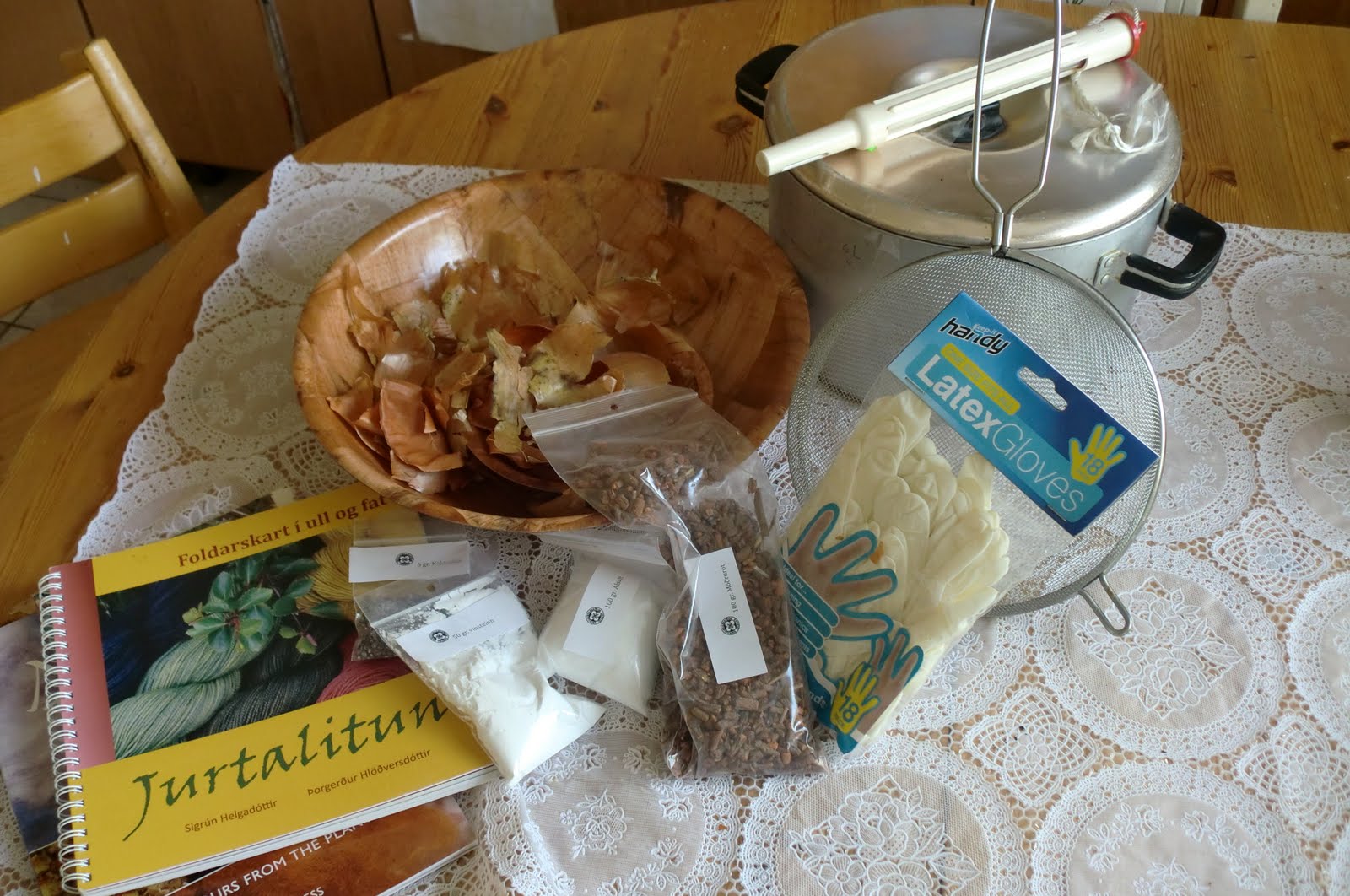
I´ve been dyeing wool (yarn: einband from istex) with plants for the last week or so. I started preparing some time ago: searching 2 old, big pots at fleamarkets, buying some chemicals, paddles, thermometer and some other things you need to do this. Last week, when I was coming home with my boys from kindergarten, I saw some "Rumex longifolius" and decided the big day has arrived: I´m finally ready to dye my wool with plants, starting with Rumex longifolius!
Yesterday was the second time I dyed, using onion peel I´ve been collecting for a few months now. I must say, wool-dyeing with plants is a bit messy, complicated and time-consuming BUT I LOVE IT anyway! :-) And when you have so much fun doing something, like I´ve been having doing this, negative factors like those above sort of vanish.
What I love about it:
1. It´s so fascinating, getting the colours for your wool and knitting-projects from nature.
2. You never really know, what colour you are exactly getting from the pots - every single time is an adventure and it´s a magical moment, when you pull the wool out of the pot to see the colour of it!
3. The colours you get are unlike everything you can buy from stores - much deeper, beautiful shades of the colours of nature and earth... really hard to describe and almost impossible to see on fotos.
The next thing I´m going to try out is Lupina - you can find that plant everywhere right now in Iceland. I´ve been told, you get different shades of green with Lupina - and since I´ve got 2 shades of yellow (from Rumex longifolius) and 2 shades of orange/brownish from the onionpeel I think it´s time for green now! :-) Here you have some pictures of the process:
The wool before the whole process:
 Wool soaking in water over night:

Plants soaking in water over night:
 Cooking plants to get the colour out of them:
 Cooking the wool in mordant:

Cooking the wool in the plant-colour:

And this is what I got from Rumex longifolius, 2 shades of yellow, on the right: 1. dye, on the left: 2. dye. You can´t really see the colours on those pictures:
 Onion peel: on the left: 2. dye, on the right: 1. dye


